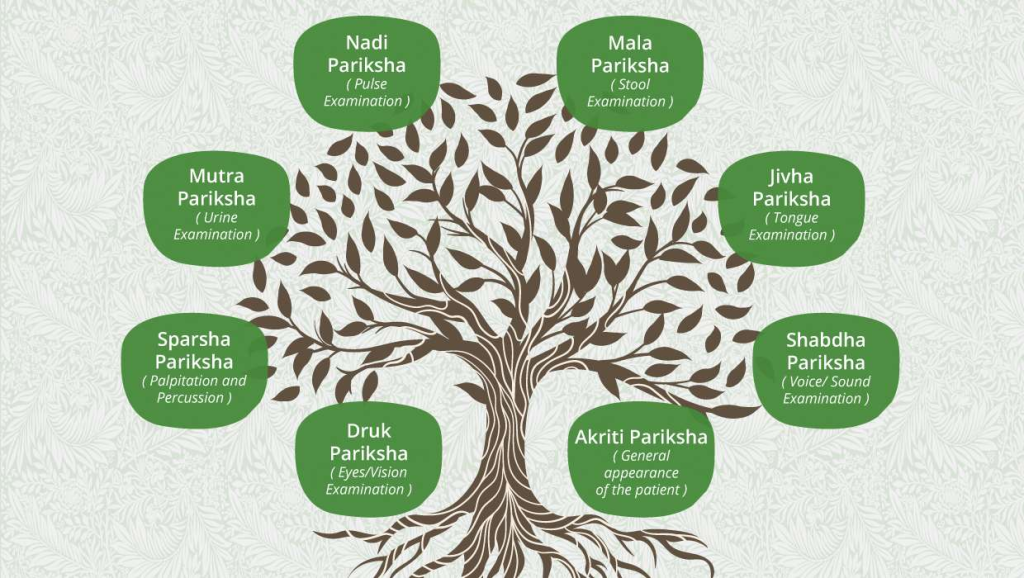
Ashtavidha Pariksha is an essential diagnostic method in Ayurveda used to evaluate the patient’s health condition. It provides a holistic assessment of the body’s internal and external state by analyzing different physiological and pathological factors.
🔹 Importance of Ashtavidha Pariksha
- Helps in dosha analysis (Vata, Pitta, Kapha).
- Aids in early disease detection and prognosis.
- Provides insights into digestion, metabolism, and organ function.
- Assists in personalized treatment planning.
🔹 Components of Ashtavidha Pariksha
| Pariksha (Examination) | Description | Clinical Importance |
|---|---|---|
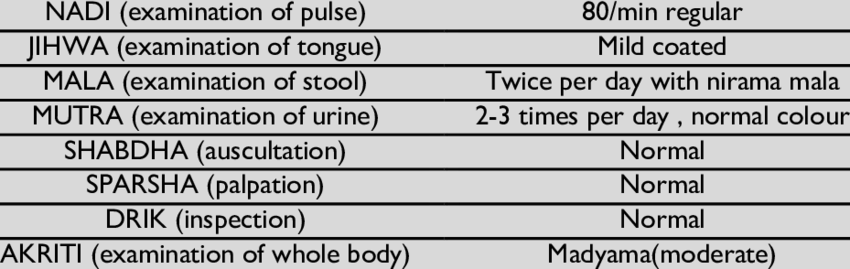
| Nadi Pariksha (Pulse) | Examining pulse rhythm, speed, and quality | Helps assess doshic imbalance and circulation |
| Mutra Pariksha (Urine) | Observing urine color, odor, frequency | Indicates hydration, metabolic status, and kidney health |
| Mala Pariksha (Stool) | Analyzing stool consistency, color, and frequency | Reflects digestive health and dosha involvement |
| Jihva Pariksha (Tongue) | Examining tongue color, coating, and texture | Indicates digestive health and toxin accumulation (Ama) |
| Shabda Pariksha (Voice) | Assessing voice quality, tone, and clarity | Identifies respiratory issues and doshic imbalances |
| Sparsha Pariksha (Touch) | Checking skin temperature, texture, and sensitivity | Helps detect dosha dominance and nerve health |
| Drik Pariksha (Eyes) | Observing eye color, clarity, and moisture | Indicates emotional state and systemic diseases |
| Akruti Pariksha (Body Structure) | Analyzing body shape, posture, and muscle tone | Determines overall health and constitution (Prakriti) |
